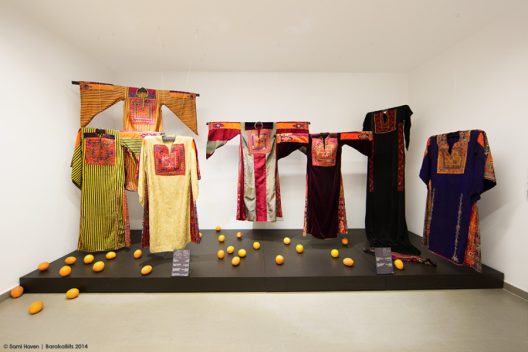





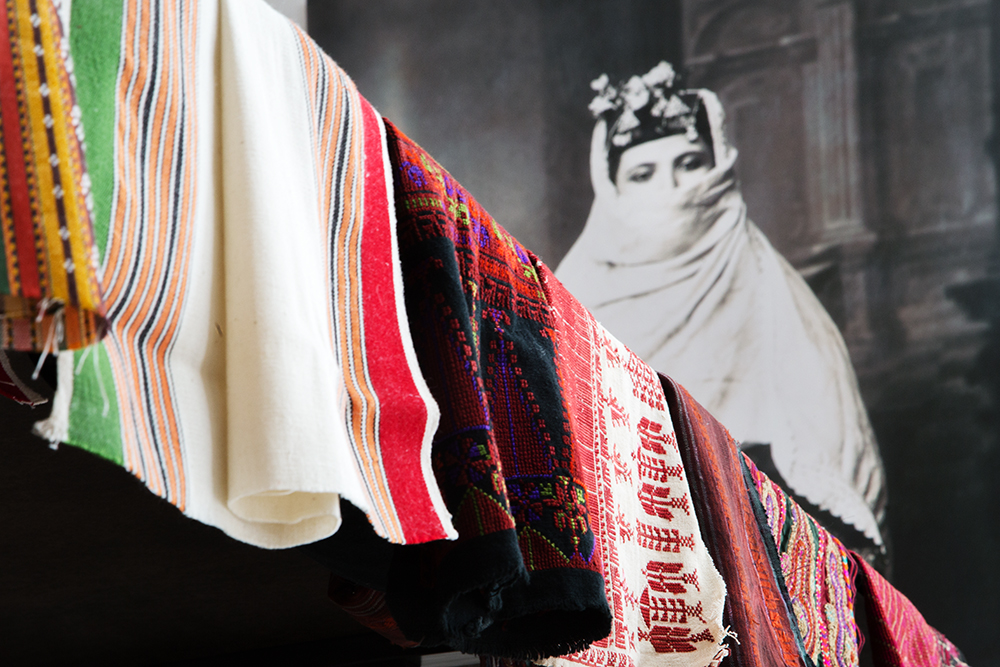

Jordan , Palestine Education Heritage Lifestyle 44 Smiles by Sami Haven 7 months ago Tiraz main showroom / By Sami Haven Malak costume, c. 1920, Bethlehem – Malak, linen, with silk panels on sleeves & sides, decorated with cross-stitch & coutching / By Sami Haven Festive coat, Kafr Takharim, Syria. Dress c.
1935 – cotton, embroidery / By Sami Haven Detail from Ikat dress, c. 1925, Ma’an area – silk (ikat) / By Sami Haven City wedding dress, c. 1870 – Silk, metal thread (silver gilted with gold) / By Sami Haven Detail from city wedding dress, c.
1870 – Silk, metal thread (silver gilted with gold) / By Sami Haven Bathing cover, c.1930, Iraqi cities – silk, silver pieces and chain / By Sami Haven Intifada dress, c. 1990 – Palestine / By Sami Haven City wedding dress, c. 1890 – 1920 – Tulle, metal thread (silver gilted with gold) / By Sami Haven Tiraz foyer / By Sami Haven Her dress collection has traveled to museums in Germany, Denmark, Norway, Iceland, and other parts of the world, but Widad Kawar never imagined that her project would go this far.
Her idea was simply to conserve all these historical fabrics through wars and migrations. Widad grew up in Bethlehem and then moved to Ramallah, drawing her inspiration from those two cities that were the heart of Palestinian textiles. After years of collection, she recently established Tiraz , a home for the largest collection of Arab dress, containing over 3,000 costumes and weavings from the 19 th and 20 th centuries.
Her dream now is to develop the center and keep the traditions of embroidery alive. Sibba Einarsdottir, anthropologist and curator of the Women’s Museum in Denmark, has known Widad since the early 1990s and believes her collection is the most important one not only of Jordanian and Palestinian embroidery but of textiles from the entire Arab world. What makes it more significant is the fact that Widad has conducted interviews and otherwise documented where the dresses come from, what year they were made, and who wore them.
“ These costumes belong to history, and to each and every one of us ,” Sibba affirms. “It’s a very important piece of cultural history, not only for the Arab world, but for everyone. Clothes tell a story and highlight women’s lives.
” For more info – tirazcentre.org/ ||||| 36 click to add a smile ||||| Share your opinion! Barakabits always welcomes useful discussions and comments that enrich our subjects. In light of our belief in the freedom of expression, all comments posted on Barakabits are not edited before being published.
You are advised to review and acquaint yourself thoroughly with our Terms of Use.